
Self-Checkout and Self-Ordering Kiosks for Retail and Restaurant Projects
Retail Self-Checkout Workflows
Hardware options for customer projects and new self-service deployments
Restaurant Self-Ordering Workflows
Self-checkout and self-ordering hardware covered on one product page
Samples & Small Batches
Start with a practical evaluation unit or pilot quantity
Windows & Android Options
Review the hardware platform around your software environment
Self-Checkout Hardware and Self-Ordering Kiosks for Two Different Workflows
Self-checkout hardware is not one standard kiosk format. Retail checkout and restaurant self-ordering projects may share a touchscreen enclosure, but the scanner, printer, payment-device position, software platform and service access can differ. Start with the customer workflow, then confirm the operating system, module configuration, quantity and destination market before requesting a sample or quotation.
For project planning, buyers may also compare self-checkout kiosk cost, scanner integration, retail workflow and countertop or floor-standing format before requesting a configuration review.
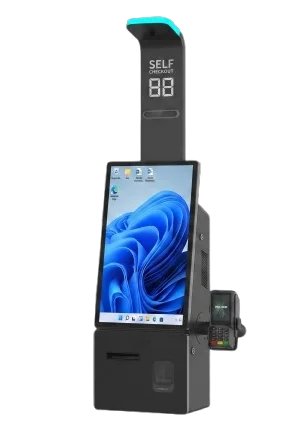
Retail Self-Checkout Kiosks
Self-checkout machines for retail projects may combine a touchscreen, barcode scanner, receipt printer and payment-device mounting position. The final module list, enclosure and installation method should follow the client’s checkout software and store plan.
Explore retail POS hardware for checkout projects
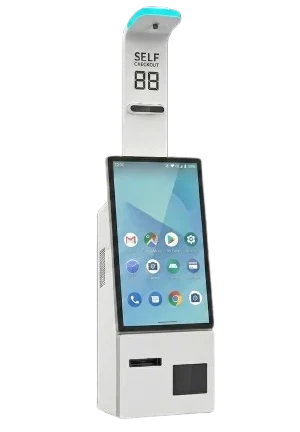
Restaurant Self-Ordering Kiosks
Self-ordering kiosks for restaurant and QSR projects typically focus on touchscreen ordering, receipt or ticket printing, payment-device mounting and practical enclosure access. Tesp supplies hardware and coordinates suppliers; ordering software remains the client’s responsibility.
A self ordering kiosk for restaurants should be reviewed around screen format, printer, payment-device position and supplier sample availability.
Explore restaurant POS hardware for self-ordering projects
Windows and Android Kiosk Platform Options
The operating system should follow the client’s kiosk application, device drivers and peripheral integration plan. Confirm the hardware platform before requesting a sample. For Android-based projects, review our Android POS terminals. For Windows application environments, see our Windows POS terminals.
Windows Kiosk Hardware
Suitable for projects that depend on Windows applications, peripheral drivers or a familiar PC hardware environment. Confirm the Windows edition, processor level, memory, storage, ports and device drivers on the selected model.
Android Kiosk Hardware
Suitable for APK-based self-service projects that need a focused touchscreen platform. Confirm the Android version, processor, memory, permissions, SDK requirements, peripheral interfaces and firmware policy before sampling.
What to Confirm Before Requesting a Self-Checkout Kiosk Sample or Quotation
A clear starting brief helps separate standard kiosk options from configurations that need additional supplier review. Share whatever is already confirmed and leave the remaining questions open for follow-up.
Operating System & Software
Windows or Android, application type, required version and installation restrictions.
Screen & Enclosure
Screen size, portrait or landscape layout, touch requirement and service-door access.
Scanner & Input
Barcode types, screen-read requirements, scanner position and USB or serial input mode.
Printer & Paper Access
Paper width, cutter, paper loading method, service access and expected print workflow.
Payment & Optional Modules
Payment-device model, bracket size, cable route and any scale, camera or RFID requirement.
Installation & Quantity
Floor, wall or countertop format, sample quantity, estimated batch size, destination and timeline.
Self-Service Kiosk Platform Configuration
Compare self-checkout hardware options by workflow, operating system, screen format, scanner, printer, payment-device position and cabinet configuration. When you request model availability or a quotation, share the required setup, quantity and destination, and review the kiosk barcode scanner integration guide for the scanner acceptance questions.
| Configuration Area | Available Range | Common Use |
|---|---|---|
| Operating System | Windows 11 or Android 11 / 14, depending on the client’s application and peripheral drivers. | Windows Kiosk Android Kiosk |
| CPU | Windows: Core i3-1215U or Core i5-1235U. Android: RK3399 or RK3576. | Kiosk App Peripheral Drivers |
| Memory & Storage | Windows configurations can support higher RAM and M.2 SSD options. Android configurations use 4 / 8 / 16GB RAM and eMMC storage. | Sample Review Batch Deployment |
| Screen | 21.5 or 27-inch 1920×1080 capacitive touchscreen. | Self-Checkout Self-Ordering |
| Installation | Floor-standing, wall-mounted or countertop installation, depending on the kiosk structure. | Floor Stand Wall Mount Countertop |
| Integrated Modules | 58mm printer, barcode scanner, payment-terminal bracket, status light and other project modules. | Printer Scanner Payment Mount Status Light |
Self-Service Kiosk Modules and Project Checks
Integrated modules vary by kiosk model and supplier. Use this table as a project checklist rather than a guaranteed standard configuration.
| Kiosk Module | What to Confirm | Common Project Role |
|---|---|---|
| Touch Display | Confirm screen size, portrait or landscape orientation, resolution, touch technology, brightness and front-bezel requirements. | Product Selection Order Entry Customer Guidance |
| Computer & OS | Confirm Windows or Android, processor level, memory, storage, network options, required ports and the expected software workload. | Kiosk Application Peripheral Drivers Remote Support |
| Barcode Scanner | Confirm supported barcode types, screen-read requirement, scanner position, trigger behavior and USB or virtual COM input mode. | Product Scanning Coupon / QR Loyalty Input |
| Thermal Printer | Confirm paper width, cutter, paper loading method, access door, sensor behavior and command or driver requirements. | Receipt Printing Order Ticket Service Access |
| Payment Mounting | Confirm the payment-device model, dimensions, bracket type, screw positions, viewing angle, cable route and maintenance clearance. | Card Terminal PIN Pad QR Payment Device |
| Enclosure & Installation | Confirm floor, wall or countertop format, anchoring points, service doors, locks, power entry, ventilation and installation accessories. | Floor Stand Wall Mount Countertop |
| Optional Modules | Confirm any scale, camera, RFID or other module, including physical space, interface, driver and project-specific compliance requirements. | Scale Camera RFID |
Self-Service Kiosk Checks Before Sample Approval
Compare self-checkout hardware options by workflow, operating system, screen format, scanner, printer, payment-device position and cabinet configuration. When you request model availability or a quotation, share the required setup, quantity and destination, and review the self-checkout kiosk cost and quote breakdown before requesting a sample.
Confirm Workflow and Platform
Confirm retail self-checkout or restaurant self-ordering workflow and platform direction.
Compare Kiosk Structure and Modules
Compare screen, cabinet, scanner, printer, payment-device position and installation format.
Review Sample and Module Evidence
Review photos, videos and module details for the selected kiosk sample.
Record the Approved Kiosk Configuration
Keep the approved structure, modules, accessories and sample record consistent.
Best-Fit Self-Service Kiosk Projects
A Practical Fit
- Self-service kiosk solution providers reviewing hardware for customer projects
- POS resellers and regional distributors adding kiosk product lines
- Retail and restaurant technology providers coordinating self-service deployments
- Software teams that need sample hardware and supplier-side module follow-up in China
Outside Tesp’s Scope
- Self-checkout or self-ordering software development and debugging
- Payment processing, acquiring services or guaranteed payment-device approval
- Local installation or on-site maintenance outside China
- Certified laboratory testing, regulatory approval or requests based only on the lowest price
Frequently Asked Questions About Self-Service Kiosk Hardware
Can this page cover both self-checkout and self-ordering kiosks?
Can I order one kiosk sample before a larger order?
Some kiosk models may support a sample unit before a larger order. Sample availability, pricing, lead time and included modules depend on the selected structure, required configuration and supplier policy.
What information do you need to recommend a kiosk configuration?
To review self checkout hardware options, share the intended retail or restaurant use, operating system, screen size, scanner, printer, payment-device model, optional modules, installation format, quantity, destination and timeline. If some details are not confirmed, send what you already know.
What should I confirm before requesting a self-service kiosk sample?
Confirm the use case, operating system, screen size, scanner, printer, payment-device mounting, cabinet format, quantity and destination market. This allows us to check suitable available configurations and sample options.
Can Tesp test our kiosk software with the scanner and printer?
Where practical, Tesp can load a client-provided APK, installer or checklist on a sample unit, observe basic opening and module response, and share raw photos, videos or notes. Tesp does not debug software or provide final compatibility approval; that decision remains with the client’s technical team.
Can the kiosk carry our logo, color and packaging?
Logo, label, boot screen, enclosure color and packaging requests can be discussed with the supplier. Feasibility, MOQ, cost and lead time depend on the selected kiosk structure and the depth of customization.
Send Your Self-Checkout Kiosk Requirements
Share your self-checkout kiosk requirements with Tesp, including the workflow, operating system, required modules, quantity and destination. Tesp can help compare available hardware options and coordinate supplier feedback; the final software and local compliance review remains with the project team.