
POS Hardware Solutions for Retail, Restaurant and Grocery Projects
Plan POS hardware combinations around the checkout workflow, not around a single device. Compare the hardware roles used in restaurant, retail and grocery projects before moving into detailed product configuration.
This B2B guide connects POS terminals, self-service hardware and weighing equipment to the project scenarios where they are commonly reviewed together.
What This Page Helps You Plan
Industry Workflow
Start with restaurant, standard retail or grocery checkout workflow before selecting individual devices.
Hardware Roles
See how POS terminals, self-service hardware and weighing equipment fit within a complete checkout project.
Detailed Next Step
Continue to the relevant industry or product page once the project direction is clear.
Choose a POS Hardware Solution by Project Type
The same POS terminal can serve different projects, but the required combination changes with the checkout workflow. Choose the closest scenario to review its hardware roles and planning questions.
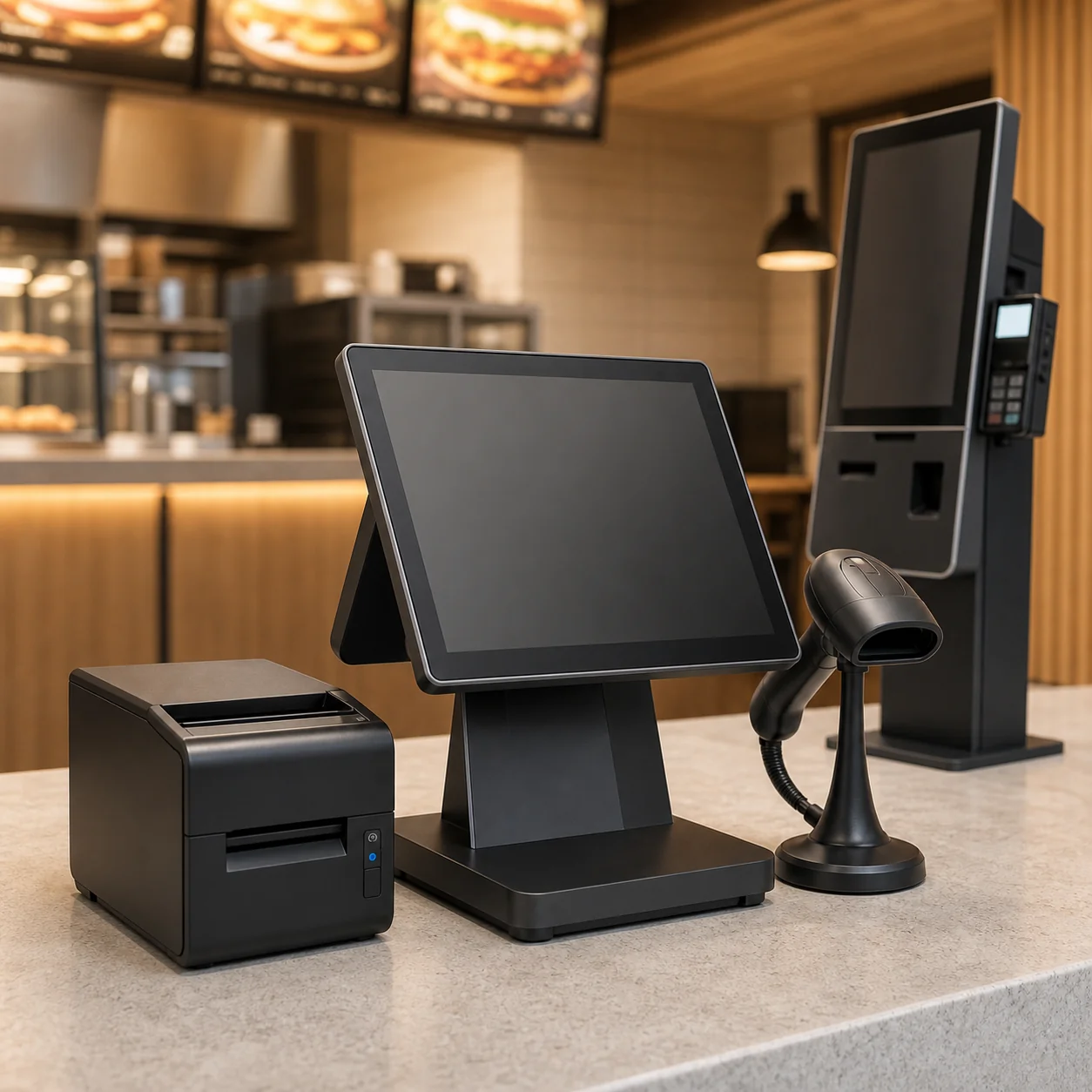
Restaurant POS Hardware
Front-counter checkout, receipt or order printing, scanning, customer display and optional self-ordering hardware.
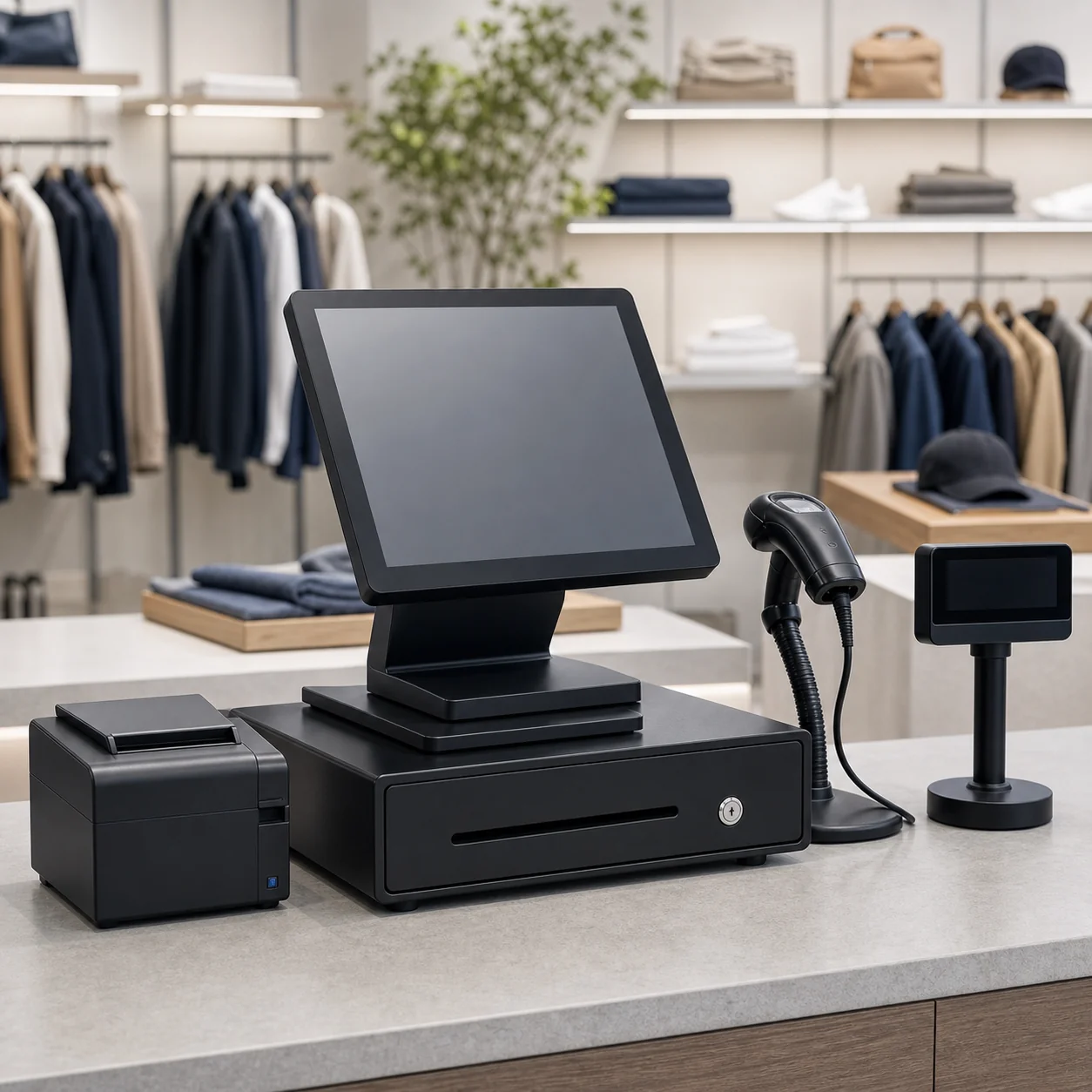
Retail POS Hardware
Standard retail checkout with POS terminal, barcode scanning, receipt printing, cash drawer and customer-facing display.
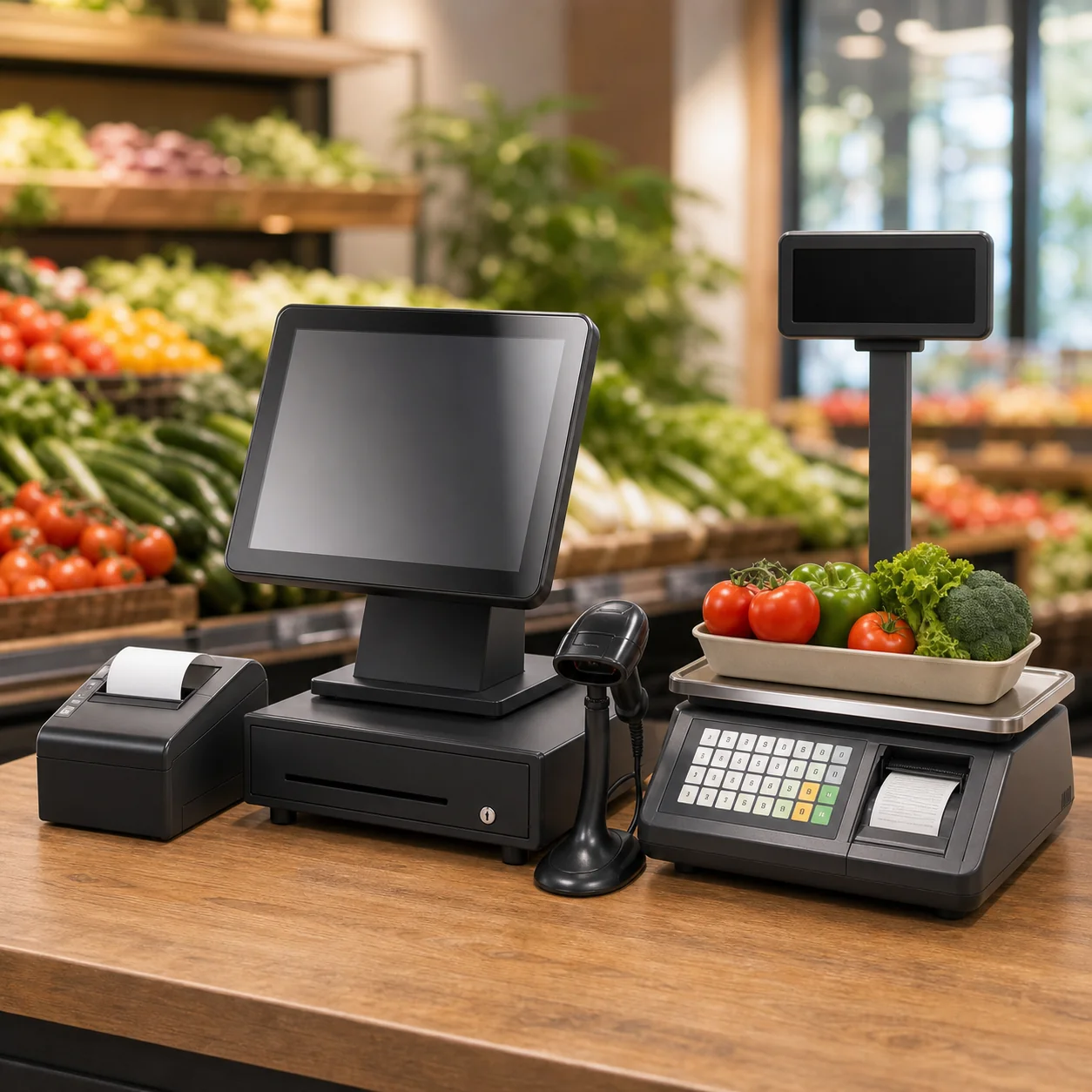
Grocery POS & Weighing Hardware
Checkout, produce and deli workflows where POS hardware, barcode scanning, weighing and label output are planned together.
Core Hardware Roles Across POS Projects
POS hardware solutions are built from device roles, not from a fixed bundle. Use this guide to understand which role belongs to checkout, self-service or weighted-item workflow before reviewing product-level details.
| Hardware Role | What It Supports | Typical Project Use | Product Detail Page |
|---|---|---|---|
| Checkout Terminal | Cashier interface, customer display direction and connection to checkout peripherals | Restaurant counters, standard retail checkout and grocery cashier lanes | POS Terminals |
| Self-Service Hardware | Customer self-ordering or self-checkout workflow with screen, scanner and printer module direction | Quick-service restaurant ordering, retail self-checkout and selected supermarket self-service projects | Self-Checkout Kiosks |
| Weighing & Label Output | Weighted-item workflow, barcode label direction and produce or deli counter preparation | Grocery, supermarket, fresh produce and deli projects | POS & Weighing Scales |
Industry pages provide the full scenario detail. The summary below explains why the same device category is reviewed differently across restaurant, retail and grocery projects.
How Hardware Combinations Change by Industry
Restaurant Checkout Hardware
The combination often prioritizes fast front-counter use, receipt or order printing, customer display and optional self-ordering. Kitchen workflow and local POS software remain outside this hardware guide.
Standard Retail Checkout Hardware
The combination centers on item scanning, a cashier terminal, receipt printing, cash drawer trigger and customer-facing display within the available counter space.
Grocery & Weighing Hardware
The combination adds produce or deli weighing and label workflow to normal checkout, so weighted-item tasks must be separated clearly from ordinary barcode scanning.
How to Choose POS Hardware by Project Requirement
Use the project requirement as the starting point. When a requirement becomes product-specific, follow the linked page instead of expanding the same specification on this Solutions page.
| Project Requirement | Hardware Combination Direction | Why It Matters | Next Review Page |
|---|---|---|---|
| Compact Checkout Counter | POS terminal plus receipt printing, scanning and cash drawer connection selected around counter space and workflow | The device footprint and peripheral layout affect daily cashier use before any detailed system choice is made | POS Terminals |
| Customer Self-Service | Self-service screen and enclosure direction with appropriate scanner and printer module requirements | Restaurant ordering and retail checkout use a similar hardware category but have different workflow and enclosure needs | Self-Checkout Kiosks |
| Produce or Deli Workflow | Checkout hardware plus weighing and label-output direction for weighted items | A grocery project must distinguish normal item checkout from weight, label and product-code workflow | Grocery POS & Weighing Hardware |
| Defined Operating System Need | Choose Android or Windows only after the buyer defines the software environment and peripheral requirements | Operating system detail belongs on product pages and must not be assumed from the industry alone | Android POS / Windows POS |
What to Prepare Before a Sample or Pilot
Clear project inputs make a hardware combination easier to review. These points support a practical sample or pilot discussion without claiming software, payment or local compliance approval.
Checkout Workflow
State the industry scenario, counter process and whether self-service or weighted items are involved.
Peripheral Requirements
List scanner, receipt printer, cash drawer, customer display and weighing hardware requirements.
System Direction
Include Android or Windows only if the buyer has a defined software environment and test responsibility.
Pilot Scope
Include sample or pilot quantity, destination market, packaging needs and buyer-side test plan.
Product and Industry Page Paths
For complete industry workflow guidance, continue to Restaurant POS Hardware, Retail POS Hardware or Grocery POS & Weighing Hardware.
For product-level configuration, compare POS Terminals, Self-Checkout Kiosks and POS & Weighing Scales. When an operating system requirement is already defined, review Android POS Terminals or Windows POS Terminals.
POS Hardware Solutions FAQ
What is included in a POS hardware solution?
A POS hardware solution is the practical combination of checkout devices for a defined workflow. It can include a POS terminal, scanner, receipt printing, cash drawer connection, customer display, self-service hardware or weighing equipment depending on the project.
How do restaurant, retail and grocery hardware combinations differ?
Restaurant projects commonly prioritize front-counter speed, receipt or order printing and optional self-ordering. Retail projects prioritize scanning and standard checkout peripherals. Grocery projects add produce or deli weighing and label workflow to ordinary checkout hardware.
Does this page provide POS software, payment processing or local installation?
No. This page is about POS hardware combinations. Software selection, payment processing, local installation, certification and buyer-side technical testing should be handled by the relevant specialist or local party.
Where should we compare operating system details?
Start with POS Terminals for the general selection path. Review Android POS Terminals or Windows POS Terminals after the buyer has defined the software environment and peripheral requirements.
What should we include in a hardware sample or pilot request?
Include the industry scenario, checkout workflow, hardware direction, required peripherals, operating system direction if known, pilot quantity, destination market and buyer-side software test plan.
Tell Us Your POS Hardware Project Direction
Share the project type, checkout workflow and required hardware. The information helps identify the relevant industry and product direction before a sample or pilot discussion.